
The Six Most Frustrating Places in NYC If You’re Gluten-Free

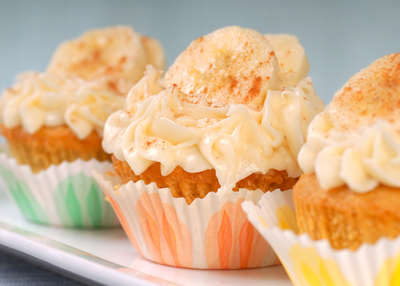
CupcakeIn New York City, food is everywhere. Street fairs, restaurants, parks—it’s hard to stay hungry if you’re walking around with a bit of cash in your pocket. If you’re gluten-free, you’re options are a bit more limited, but the temptation remains. Here are the six most frustrating…and tempting…places in NYC if you’re gluten-free.

1) Anywhere near a food cart with those amazing pretzels and hot dogs.

Especially in spring, these seem like the perfect nosh to accompany your walk down Museum Mile—convenient and ubiquitous, and completely forbidden.

2) Trying to find something to munch on in Central Park’s cafés.

Fries, burgers, sandwiches, croissants. All quick-and-easy, grab-and-go foods. Excellent for a stroll in Central Park. But no, not for you, gluten-free dieters. You get to choose from an apple, or a banana. How many bananas can you eat before going crazy?

3) The Plaza Food Hall is just a big tease!

But I keep going back, because it’s majestic. Luckily, there is a vendor that sells about seven different flavors of marshmallows, which are all gluten-free. I’ve suddenly become a big fan of marshmallows.

4) Crumbs Bake Shop.

Crumbs, where I used to sit with a cupcake and read my books for class, is now a distant memory. However! The very Crumbs where I used to study has become Crumbs Gluten-Free! I hope every day that soon, there will be a gluten-free option in every Crumbs Bake Shop around the city.

Also on the subject of cupcakes—visiting the Sprinkles Cupcake ATM is not only a good way to feel like an awestruck tourist in your own city, but it dispenses a gluten-free option: red velvet. Better luck next time if you don’t like red velvet…

5) Two words: NYC Pizza. (Well, a word and an acronym.)

6) On your couch ordering takeout.

If you actually find a place that offers gluten-free options (they do exist, depending on where you live in the city), there is probably an additional $2.00 fee for the gluten-free bun/gluten-free pasta/gluten-free bagel. I get it, gluten-free foods are expensive. But my salary doesn’t increase just because I’m gluten-free. I’m ordering in because I want to relax, not set fire to my credit card. Give me a lettuce wrap instead.

Celia Kaye icon png

– Kaitlin Puccio

The Other Kind of Green Thumb

Copyright Kaitlin PuccioEver eaten food that was supposedly gluten-free, but you still felt terrible afterward? This is one of the reasons I have chosen to stay away from foods labeled “gluten-free,” and instead eat foods that are naturally gluten-free. But I can only eat so many vegetables without feeling like I’m about to start sprouting broccoli from my ears and growing leafy-green fingers.

Luckily, my woes are about to be buried deep in the soil. According to the National Foundation for Celiac Awareness, today the FDA released a statement defining the term “gluten-free,” which sets a universal standard that celiacs can trust to help them (us) maintain a truly gluten-free diet.

Gluten-free food is now defined by the FDA as food that is naturally gluten-free (my favorite), does not contain any ingredient that contains gluten, was made from a grain containing gluten that has not been processed to remove the gluten, or has been processed in this way, but if in using that ingredient, the food still contains 20 parts per million (a very small amount of contaminant) or more gluten. Food containing any gluten that just won’t go away (or, as the FDA calls it, “unavoidable”) needs to be less than 20 parts per million.

This doesn’t mean that anything that’s not marked gluten-free is verboten for celiacs under penalty of stomachaches (and worse). Companies have the option to pursue labeling their foods gluten-free, and some might opt out. So the ingredients list will still help you decide whether certain foods are gluten-free (but if you’re hyper-sensitive to gluten, even if the ingredients list doesn’t include anything containing gluten, there’s still the risk of cross-contamination), with the added assurance that if foods are marked gluten-free, it’s been put to the test.

Will this make it more difficult to identify gluten-free foods quickly in stores? Possibly. Some companies might choose to not go through the trouble to label their product gluten-free, so we might be reading more ingredients lists. But since the gluten-free label is a fad these days (so, a big selling point), I’d be interested to see how many companies do indeed drop the gluten-free label.

Celia Kaye icon png

– Kaitlin Puccio

Another new year, another diet resolution…

freeimages.com/saifonnarongrat

Almost everyone has, at one point, tried to stick to a New Year’s diet. And almost everyone has failed. Why is it so difficult to keep our New Year’s diet resolutions? If you have celiac disease and have been taking advantage of your last few days of wheat-eating freedom before the New Year–when you’ve decided you’re going to start your wheat-free diet–yours is a diet resolution that, if broken, could be very damaging. Here’s a tip for sticking to a gluten-free diet.

Be reasonable! One of the reasons people fail to keep their New Year’s resolutions is because they are too ambitious. If you start out with ten different resolutions, it might be too overwhelming for you to try to change that many aspects of your life. Focus your energy on one instead, and stick to it. If you cheat, don’t give up on your entire resolution. Scold yourself, then accept that you cheated, and continue pursuing your resolution.

So if you have celiac disease and you accidentally eat soy sauce one day at lunch, don’t cave and have a meatball hero for dinner because you “already ate wheat products today anyway.” Make a note to buy some tamari sauce instead of soy sauce and stay away from wheat for the rest of the day. Just because you ate soy sauce doesn’t mean you’ve failed, or that eating gluten-free is an impossible task.

When I was first diagnosed with celiac disease, I didn’t know what to eat. I didn’t want to eat frozen gluten-free foods all the time, because a lot of them contain more sodium than I should eat in one meal. But before I made myself a meal plan, I had to eat some frozen foods so that I didn’t starve myself while trying to eliminate wheat. I had to transition slowly. While I traded cabinets full of pasta for quinoa, I stocked up on frozen foods. They got me through the week while I went shopping for beans, rice, and veggies. So although my ultimate goal was to use celiac disease as a catalyst for healthy eating, I had to start off slowly eliminating the foods that I couldn’t–or didn’t want to–eat.

If I had started off not eating those frozen foods AND not eating gluten-free foods, I would have had empty pantries, no meal plan, a growling stomach, and would have ultimately given up and written off gluten-free eating as a starvation diet.

So my advice for starting a gluten-free diet after New Years is to not be too ambitious. Give yourself time to adjust, set a reasonable goal for yourself–one that you can actually keep–and give your body a chance to have a healthy new year.

Celia Kaye icon png

– Kaitlin Puccio